Safety
Circus Studio Clothing Etiquette: Dress for Safety & Cleanliness
Silk burn, friction injuries, and fabric hygiene — why what you wear to aerial circus class matters, and how our dress code keeps everyone safe.
There's a specific kind of mid-class regret that comes from showing up in the wrong outfit. For aerial silks, it happens fast: a loose t-shirt flips over your face on your first climb, a zipper on your waistband shreds the fabric, or bare skin meets moving silk at speed and leaves you with a friction burn. At Flexibility in Flight, our dress code isn't about fashion — it's about safety, cleanliness, and protecting the equipment we all share.
The real risk: silk burn and friction injuries
Aerial silks, lyra, and rope all rely on contact between your body and the apparatus. The fabric or metal has to grip you to keep you up. When that same pressure slides across bare skin — especially at the inner arms, backs of the knees, sides of the ribcage, and hips — it creates friction burns, also known as silk burn. The community discussion at r/Aerials makes this point over and over: uncovered skin and fast-moving fabric are a painful combination.
Aerials Amsterdam puts it simply: the main problem spots are the inner arms, backs of the knees, and sides of the ribcage — all the places where the fabric wraps or pinches during footlocks and drops. By your third class, you'll be glad you covered up. Students who train with bare skin often spend weeks managing burns and bruises that proper clothing would have prevented.
Cover more than you think you need to
For silks, lyra, rope, and aerial yoga, the rule is coverage. Full-length leggings are non-negotiable. A fitted long-sleeve top or rashguard that covers your armpits and elbows is strongly recommended. The less exposed skin sliding against fabric or metal, the lower your risk of burn, bruising, and abrasion.
- Full-length leggings that cover the backs of your knees
- A fitted long-sleeve top or rashguard covering armpits and elbows
- A sports bra or fitted tank underneath in case you warm up
- Bare feet — no socks or shoes on the apparatus
- Long hair tied back and secured with a plain elastic
Pole is the exception: skin is your grip
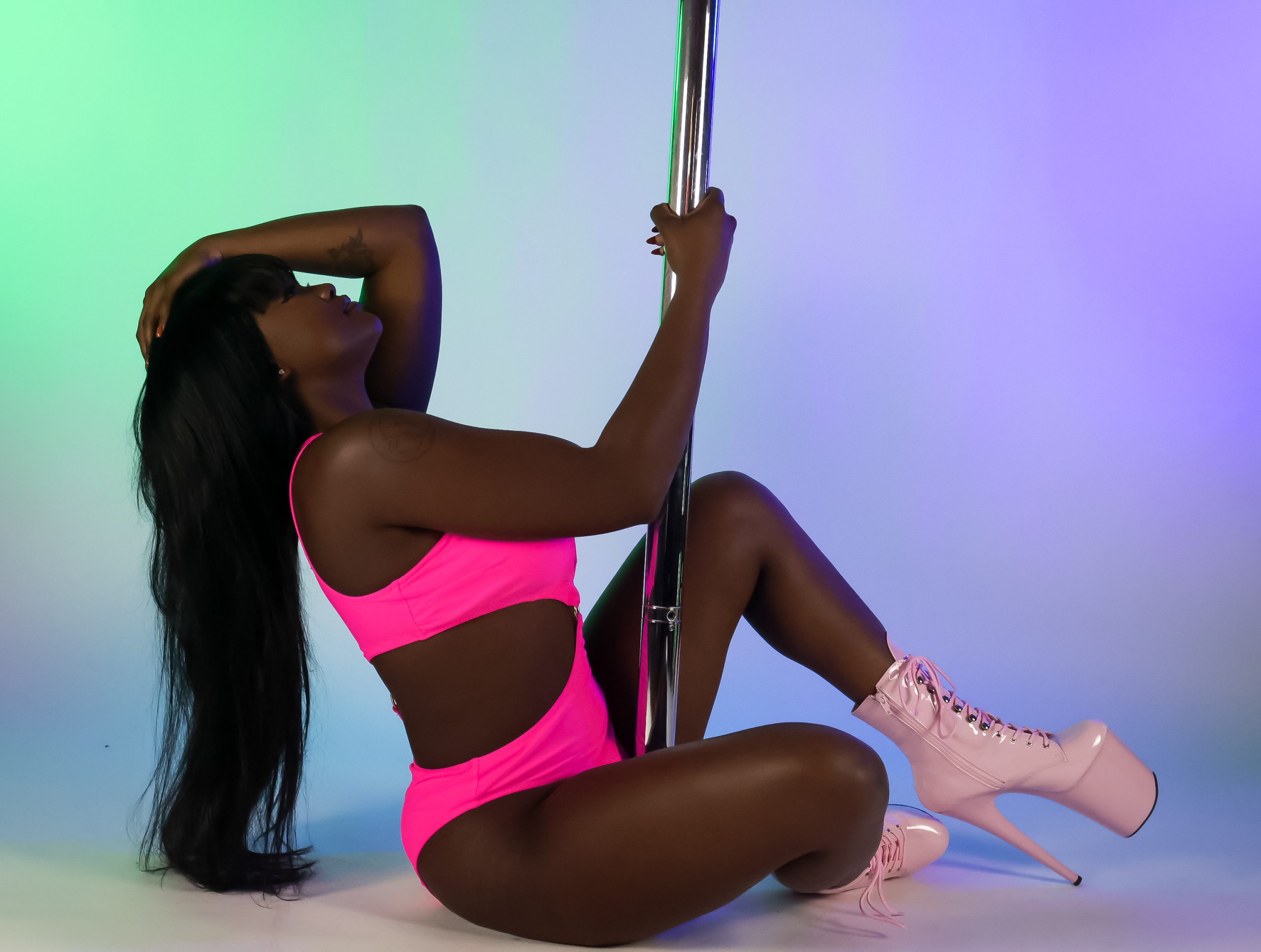
Pole fitness flips the logic entirely. The pole grips your skin, not your clothes — fabric slides on chrome and makes basic moves unsafe. For pole, shorts and a fitted sports bra or tank are the standard. No lotion, oil, or self-tanner within 24 hours, and all jewelry comes off. If you're taking both pole and aerial classes, bring separate outfits or plan accordingly.
Fitted, not tight (and definitely not loose)
The fabric has to move with your body, not around it. A billowy shirt will invert over your head within minutes. Wide-leg trousers make footwork difficult. But you don't need compression gear — something with stretch, full coverage, and smooth seams is all you need. A leotard or bodysuit under leggings is even better because it stays tucked no matter how upside down you get.
Fabric matters more than you'd expect
Cotton and cotton-blend fabrics grip the silks better than slick synthetics. Standard athletic nylon or moisture-wicking spandex can slide at exactly the moment you need friction. Many regular aerialists eventually invest in velvet-finish leggings, which grip the fabric exceptionally well and make footlocks and climbs easier. For your first class, cotton-blend leggings and a fitted top are perfect.
What to leave at home
This is about protecting both you and the equipment. Silks, hammocks, and ropes are expensive and easy to damage. Metal on lyra and apparatus hardware can catch and tear fabric or pinch skin.
- All jewelry — rings, watches, bracelets, necklaces, earrings
- Zippers, buckles, snaps, sequins, or belt loops
- Loose t-shirts that ride up during inversions
- Long fingernails that can tear fabric or make gripping harder
- Heavy perfumes, scented lotions, or body oils
Cleanliness matters in a shared studio
We all share the same silks, hammocks, poles, and mats. Clean, dry clothing helps keep the studio hygienic and the equipment in good condition. Please avoid strong fragrances — they can trigger headaches and asthma in a small, warm studio. Skip lotion or oil on your hands and forearms before aerial class; it transfers to the fabric and makes everything harder to grip. If you're coming straight from work or a run, a quick change into fresh clothes goes a long way.
Why this is part of our dress code
Our dress code exists so every student can train safely and every class can run smoothly. Instructors may ask you to change or sit out a skill if your clothing puts you or the equipment at risk. That isn't gatekeeping — it's the same standard circus studios use worldwide. When everyone follows the clothing etiquette, we spend less time managing injuries and more time in the air.
Your pre-class checklist
- Full-length leggings or fitted pants with full coverage
- Fitted top covering armpits and elbows for aerial; shorts and sports bra for pole
- Cotton or cotton-blend fabric when possible
- No jewelry, zippers, buckles, or metal hardware
- No lotion, oil, or heavy fragrance on skin or hands
- Hair tied back and nails trimmed short
- Bare feet; water bottle and a small towel optional
Still unsure what to wear? Message us before your first class. Our Chester, NY studio is a judgment-free space, and we'd rather answer ten outfit questions than see anyone leave class with a preventable silk burn. Reserve your spot on the schedule and come dressed to fly safely.